Key Benefits of PICVs & FCU Links Over General Motorized Valves
- Elimination of Overflow and Energy Waste
With a general motorized valve, system pressure spikes force excess chilled or hot water through the FCU. This causes “low Delta-T syndrome,” forcing chillers and pumps to work much harder than necessary. A PICV maintains the exact design flow rate regardless of pressure changes, typically reducing HVAC pumping energy by 15% to 30%.
- Superior Occupant Comfort
Standard motorized valves often “hunt” (constantly opening and closing) when trying to manage high differential pressures, leading to unstable room temperatures and premature actuator wear. PICVs offer true 100% valve authority, delivering smooth, precise temperature modulation without hot and cold swings.
- Faster Installation & Fewer Leak Points
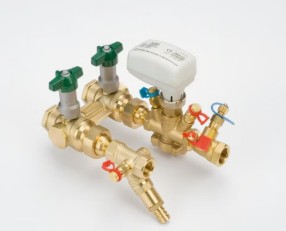
Installing a traditional setup requires piecing together a motorized valve, a balancing valve, strainers, and multiple isolation valves on-site. An FCU link comes factory-assembled and pressure-tested.
- Less labor time on the job site.
- Fewer threaded joints, drastically reducing the risk of ceiling leaks.
- Compact footprint, making it easy to fit into tight ceiling plenums.
- Simplified Commissioning and Balancing
Balancing a building with general motorized valves requires technicians to manually measure and adjust flow rates at every single terminal unit—a process that takes days or weeks. With a PICV, you simply dial in the required GPM/LPM right on the valve body before or after installation, cutting commissioning time by up to 50%.
- Built-In Maintenance Access
FCU links are designed with facility managers in mind. They typically include integrated flushing bypasses, Y-strainers, and pressure/temperature (P/T) test ports. When an FCU needs servicing, technicians can isolate, flush, and test the unit without draining the entire floor’s riser.
Quick Comparison: PICV + FCU Link vs. General Motorized Valve
Feature PICV + FCU Link General Motorized Valve
Pressure Compensation Automatic (Built-in) None (Requires separate balancing valve)
Valve Authority Always 100% Drops as system pressure changes
Installation Time Fast (Prefabricated assembly) Slow (Multiple loose components)
Leak Risk Low (Factory-tested joints) Higher (Many on-site connections)
Energy Efficiency High (Prevents overflow & low Delta-T) Moderate to Low
Upfront Component Cost Higher per valve Lower per valve
Total Installed Cost Lower (Saves on labor & extra valves) Higher (More parts + balancing labor)