
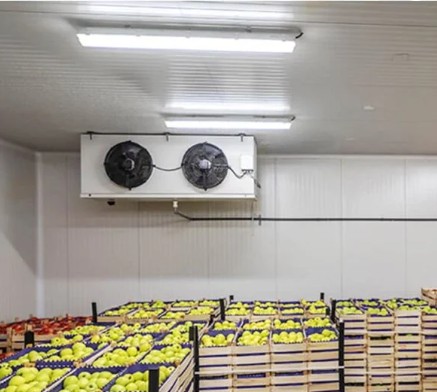
Description
Cold Room Solutions for Vegetable and Fruit
1. Cold Room Temperature Setting
Different fruits and vegetables may require different temperature settings. For example, some subtropical fruits, such as durian, may be better suited for storage in cold storage, while certain perishable vegetables, such as tomatoes, may be better suited for cold storage. Quick freezers are usually used for products that need to be stored for a long time or exported, such as frozen fruit juices or frozen vegetable cubes.
0°C – 5°C
Carrots, Strawberries, Peaches, Cherries, Cauliflower, Apples, Oranges, Tomatoes

5°C – 10°C
Pineapple, Potatoes, Onions, Bell Peppers, broccoli, Eggplant

10°C – 14°C
Cucumber, Banana, Mango, Watermelon, Garlic, Lemon, Grape, Subtropical Fruit (Durian)

We also provide freezer room (-2°C – 0°C), a lower temperature for fruit and vegetable, and blast freezer room (-18°C – -40°C) for frozen food, it is up to your needs.
2. Cold Room Humidity Setting
Maintaining proper humidity can prevent fruits and vegetables from dehydrating and losing their freshness. The ideal humidity range for most fruits and vegetables is 85% – 95%.
3. Other factors
- Ventilation: Good ventilation not only helps maintain the proper temperature inside the freezer, but also reduces the build-up of ethylene and other harmful gases that can accelerate the aging of fruits and vegetables.
- Light: Certain fruits and vegetables, such as potatoes, are better stored in the dark because light can cause them to sprout or change color.
- Ethylene sensitivity: Certain fruits and vegetables (eg, apples, tomatoes) release ethylene gas, which may accelerate the ripening and aging of other fruits and vegetables. Therefore, the placement and isolation between fruits and vegetables need to be considered.
- Packaging: Proper packaging protects fruits and vegetables from contamination, reduces moisture loss, and provides additional protection.
Reviews
There are no reviews yet.