
Description
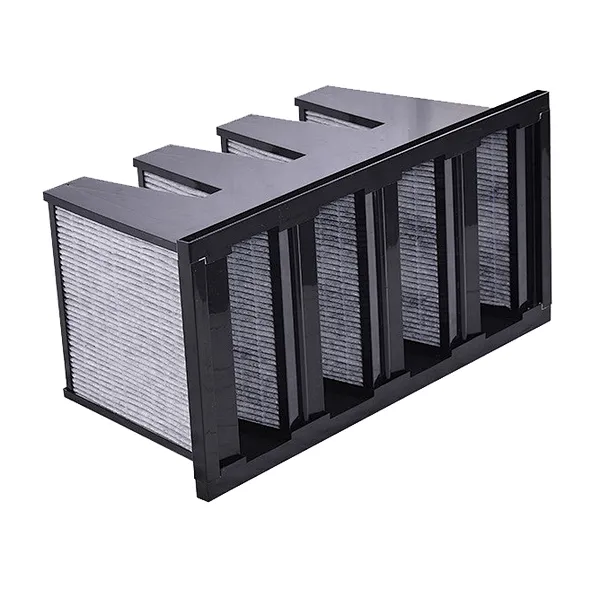
Compact Activated Carbon Filter Technical Specification
| Technical Specification | ||
|---|---|---|
| Filter Type | Compact activated carbon filter | |
| Filter Class | G4-F9 | |
| Filter Media & Seperator | Carbon Non-woven Fabric & Hot Melt | |
| Filter Frame | Plastic | |
| Max. Temperature | 80°C | |
| Relative Humidity | 80% | |
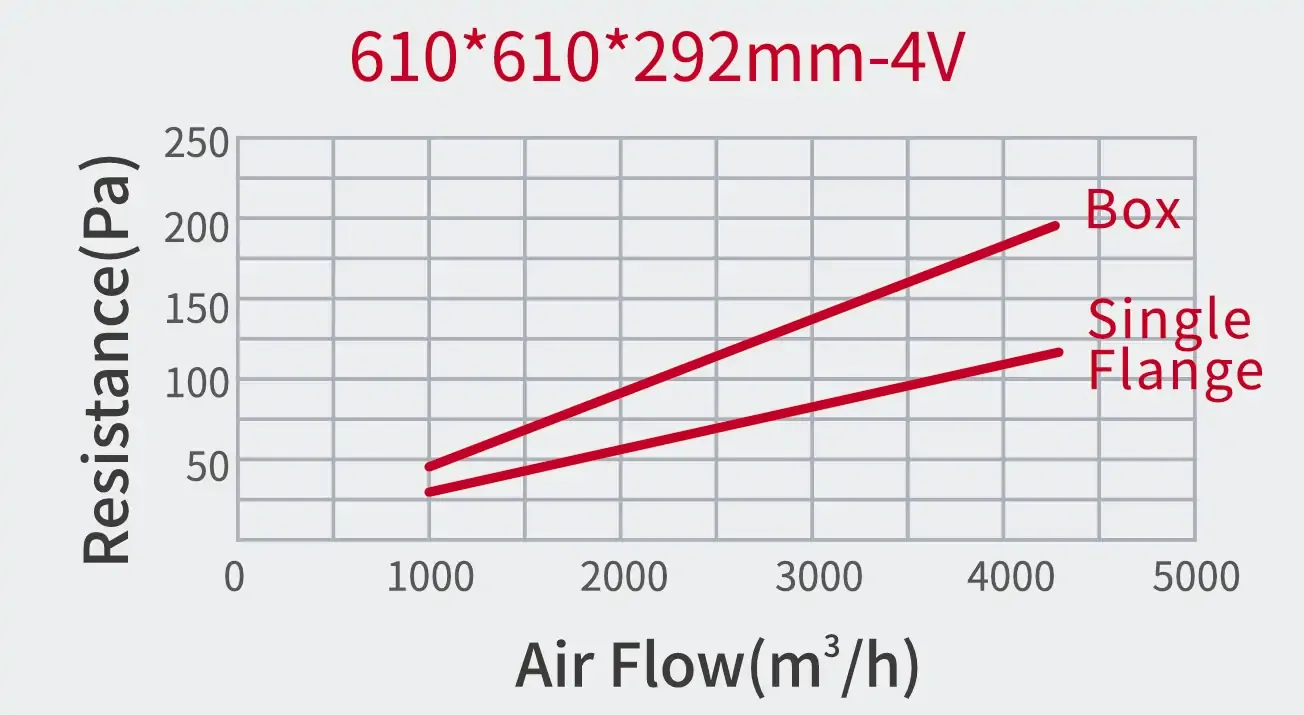
| Rec. Final Pressure Drop | 450/600 Pa. | |
Dimensions & Technical Details
|
Dimensions & Technical Details
|
||||||||
|
Depth
|
Size
(mm)
|
Rated Airflow
(m³/h)
|
Initial Pressure Drop
(Pa.)
|
Adsorption Rate
(%)
|
CTC
(%)
|
Benzene
(%)
|
||
| 292 | 592×592 | 2000/3400 | <55/90 | 90 | 50 | 60 | ||
| 592×492 | 1500/2800 | <55/90 | 90 | 50 | 60 | |||
| 592×287 | 1000/1800 | <55/90 | 90 | 50 | 60 | |||
| 610×610 | 2000/3400 | <55/90 | 90 | 50 | 60 | |||
| 610×305 | 1000/1700 | <55/90 | 90 | 50 | 60 | |||
Note: other specifications can be customized according to requirements
Features
- Rich pore structure
- Large specific surface area
- Strong adsorption capacity
- Great deodorizing effect
- Low pressure drop and high dust holding capacity
- Long lifetime
Application
- Clean rooms and laboratories
- Hospital, Airports
- Chemical Engineering
- Semiconductors
- Pharmaceutical Industry
Technical Details of Activated Carbon Filter
What is Compact Activated Carbon Filter?
Activated carbon filters usually use granular activated carbon (such as coconut shell or columnar activated carbon) as filter material. These activated carbons have undergone special chemical treatment and possess high adsorption performance and a large specific surface area (up to 1000~2000 m²/g), which can effectively remove odors, harmful gases, and organic compounds from the air.
The outer frame of the filter is made of materials such as ABS plastic frame, galvanized frame, or stainless steel frame. The surface can be made of waterproof cardboard, black non-woven fabric, aluminum edge strips, etc., to adapt to different usage environments and requirements. Some models also adopt a double-sided powder-coated guardrail support net design to enhance sealing and durability
Sustainable Activated Carbon Air Filter Production Process
At RT AIR FILTERS, we are aware of our corporate responsibility in environmental protection. Therefore, we are committed to practising sustainable development throughout the entire production cycle of our activated carbon filter.
We practice strict recycling of our production waste to ensure that all recyclable filter materials are reprocessed and reused to minimise resource wastage. For example, polyester fibre waste from the cutting process is collected and returned to the production line.
In addition, the ironing machines we use are heated only by electricity, eliminating organic emissions at source and ensuring a clean and pollution-free production process. Special attention is paid to the processing temperature of the fibres, which is precisely controlled so that they do not reach their melting point, thus avoiding the release of harmful gases that may be generated during the manufacturing process of needled nonwovens and ensuring that our eco-friendly filtration products are not harmful to the environment and human health.
Choosing RT AIR FILTERS’ environmentally friendly activated carbon air filters means you are choosing to work with a company that is committed to green production and sustainable development.


Reviews
There are no reviews yet.